The Conversation
22 Jul 2025, 20:09 GMT+10
Share article
Copy article link
Print article
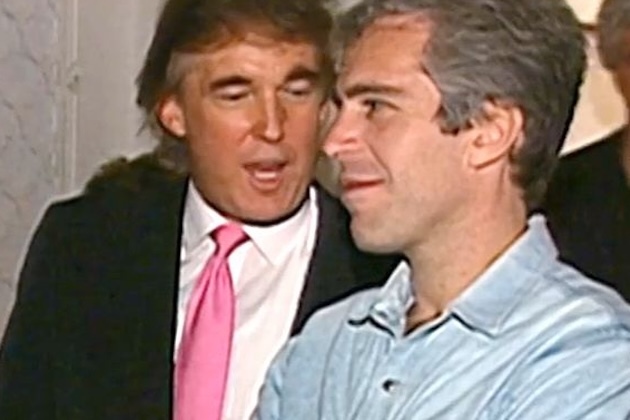
In the United States, President Donald Trump has been pressuring the chairman of the US Federal Reserve, Jerome Powell, to slash interest rates. This is partly to ease the interest payments on the ballooning US government debt.
Powell has so far resisted, but Trump has also threatened to replace him with someone who will do what he asks.
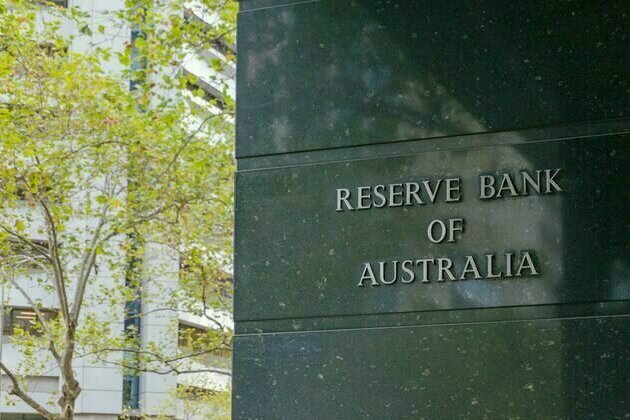
In Australia, after the Reserve Bank's surprise decision to hold interest rates steady this month, some commentators have wondered if the central bank had "betrayed" Australians. Treasurer Jim Chalmers pointedly remarked:
It's not the result millions of Australians were hoping for or what the market was expecting.
On Tuesday, the Reserve Bank released the minutes of that controversial policy-setting meeting, which said some economic data was slightly stronger than expected. The majority of the board believed:
lowering the cash rate a third time within the space of four meetings would be unlikely to be consistent with the strategy of easing monetary policy in a cautious and gradual manner.
Wouldn't we be better off if central banks kept interest rates low, as some politicians and borrowers were hoping for? It would certainly help those of us with mortgages.
Surprisingly, the answer is no.
We are better off when central banks set interest rates with a view on the longer run rather than just the short-term demands of politicians and borrowers.
To see why we can look at history to see what happens when a central bank isn't independent.
In the 1970s the chairman of the US Federal Reserve, Arthur Burns, was pressured to cut interest rates in the run-up to the 1972 election. He dutifully did so and, while President Richard Nixon was re-elected, this led to "stagflation" - with inflation, unemployment and even interest rates, higher than before interest rates were cut.
A more recent example of political pressure can be seen in Turkey where the president pressured the central bank to cut interest rates. He hoped to stimulate the economy and believed higher interest rates caused higher inflation.
Unfortunately, lower rates were shortly followed by higher inflation and, ultimately, much higher interest rates.
And today in the US, even though Powell has so far resisted Trump's pressure, financial markets are shaken and long-term interest rates go up when Trump talks about replacing him.
Lower interest rates can be like a caffeinated energy drink - they give you a short-term energy boost, but can leave you tired, irritable and with a headache when the effects wear off.
So, why does this happen? It's all about expectations.
A central bank influences the economy both through what it does and what people expect it to do. The ability to shape expectations is a powerful tool for central banks, especially during crises such as the COVID pandemic, when official interest rates were close to zero.
Imagine, for example, you are about to take out a mortgage. In making this decision you will likely think not just about current interest rates and your ability to make repayments, but what is likely to happen to future interest rates, your wages and inflation.
Credibility is the key to successfully shaping people's expectations. If a central bank is independent and credible, consumers and businesses will listen to what it says and adjust their expectations accordingly.
The chart below illustrates this point.
Macquarie University's Business Outlook Scenarios Survey asks businesses if they believe the Reserve Bank will meet its inflation goals. Those that do trust the bank (the line labelled "certain") have lower inflation expectations than those that don't (the line labelled "uncertain").
Importantly, the expectations of those that trust the bank to meet its inflation goals tend to align with the bank's 2-3% inflation target over the business cycle.
And these expectations affect what businesses and consumers do today.
So, how credible is the Reserve Bank today?
Data from the Business Outlook Scenarios Survey shows the Reserve Bank has rebuilt its credibility since its 2021 "promise" not to raise interest rates until 2024. It has done this by reforming its board structure and membership, being more open and, most critically, by hitting the inflation target.
Indeed, the most recent survey data shows that, if anything, the surprise decision increased people's confidence in the bank's ability to control inflation.
In July, the survey was in the field between July 7 and 10. The Reserve Bank made its announcement on July 8. Out of 512 businesses surveyed, 368 completed it before the announcement and 144 completed it after the announcement.
Overall, more than 40% of businesses surveyed were certain the Reserve Bank will achieve its inflation target. This is up from less than 10% a year ago. And, those who completed the survey after the announcement were more likely to trust the Reserve Bank than those that who completed it before the announcement.
So next time you hear politicians and commentators calling for immediate interest rate cuts, you should hope the Reserve Bank ignores those calls and focuses on the longer term. Overseas experience shows things do not end well when politicians start determining interest rates.
Get a daily dose of Middle East Star news through our daily email, its complimentary and keeps you fully up to date with world and business news as well.
Publish news of your business, community or sports group, personnel appointments, major event and more by submitting a news release to Middle East Star.
More InformationWisconsin [US], July 22 (ANI): Global aerospace company Boeing on Tuesday projected global demand for nearly 2.4 million new commercial...
Share article Copy article link Print article In the United States, President Donald Trump has been pressuring the chairman of...
New Delhi [India], July 22 (ANI): Air India on Tuesday informed that it has concluded inspections on the locking mechanism of the Fuel...
New Delhi [India], July 22 (ANI): The Ministry of Commerce and Industry, led by Union Minister Piyush Goyal, has unveiled a series...
New Delhi [India], July 22 (ANI): International Monetary Fund Deputy Managing Director Gita Gopinath has announced that she will return...
Scott Bessent said the central bank was wrong to criticize President Donald Trump's tariff policy ...
WASHINGTON, D.C.: U.S. Director of National Intelligence Tulsi Gabbard has caused a significant stir by demanding that former President...
SAN FRANCISCO, California: Microsoft announced July 18 it will no longer allow engineers based in China to provide technical assistance...
WASHINGTON, D.C.: A new controversy has erupted around President Donald Trump's past ties to Jeffrey Epstein, as his administration...
A chorus of condemnation echoed across the international community on Monday as Britain and more than 20 other countries—including...
WASHINGTON. D.C.: Airport security rules could soon see another major shift — this time involving carry-on liquids. Homeland Security...
We are living in truly extraordinary times. We recently witnessed the United Nations special rapporteur on the situation of human...