Xinhua
31 Jul 2025, 11:15 GMT+10
The GDP slowdown is largely attributed to the uncertainties around the U.S. tariff policies, which will continue to cast a shadow on the euro area economy despite a newly reached agreement between the EU and the United States.
BRUSSELS, July 31 (Xinhua) -- The economic growth of the euro area nearly came to a halt in the second quarter this year as uncertainties triggered by U.S. tariffs took a toll.
The Eurozone Q2 GDP increased by 0.1 percent quarter on quarter and 1.4 percent year on year, according to figures published by the statistical office of the EU on Wednesday.
The GDP slowdown is largely attributed to the uncertainties around the U.S. tariff policies, which will continue to cast a shadow on the euro area economy despite a newly reached agreement between the EU and the United States.
MINIMAL GROWTH
The euro area economy narrowly escaped stagnation in the second quarter when it recorded the lowest quarterly growth rate since the beginning of 2024.
The economic slowdown of the euro area contrasts sharply with the first quarter when the economy fared surprisingly well and went up by 0.6 percent.
Germany, the eurozone's largest economy, saw its GDP fall 0.1 percent in the second quarter from the previous quarter, following a 0.3 percent expansion in the first. Italy, which is heavily exposed to trade tensions, also posted a 0.1 percent quarter-on-quarter decline, reversing its 0.3 percent growth in the first quarter.
Spain's economy grew robustly with the highest rates driven by domestic consumption and investment, up 0.7 percent compared with the previous quarter. France and Portugal also advanced, up 0.3 percent and 0.6 percent, respectively.
Ireland's GDP declined by 1 percent in the second quarter, a sharp reversal from the staggering 7.4 percent growth recorded in the first quarter, marking the steepest quarterly drop among eurozone countries in Q2.
The economic slowdown in the second quarter was in line with expectations that the reversal of the front-loading effect, coupled with the U.S. tariffs, had weighed on the euro area economy.
U.S. TARIFFS BITE
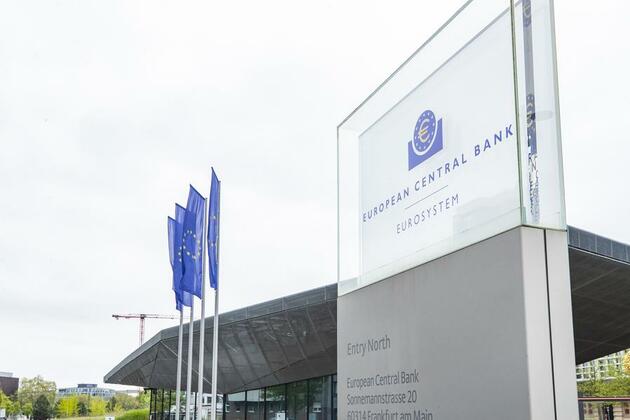
The European Central Bank (ECB) has identified U.S. tariff policies as one of the most significant challenges facing the eurozone economy.
At a press conference last week, ECB President Christine Lagarde confirmed that front-loaded exports had helped boost euro area growth in the first quarter. But in the second quarter, countries heavily dependent on exports were hit hard by the U.S. tariffs.
The Trump administration announced in March that imports of steel and aluminum products from the EU would face a 25 percent tariff, which was raised to 50 percent by the end of May.
"The erratic tariff policy of the USA is hitting Europe's economy hard -- especially Germany," said Gunnar Groebler, CEO of German steelmaker Salzgitter.
The EU and the United States later reached a deal to impose a 15 percent tariff on nearly all European imports, avoiding a worst-case scenario of a 30 percent levy threatened by U.S. President Donald Trump.
But the agreement has drawn skepticism, with critics warning that even a 15 percent tariff will inflict serious damage on the European economy.
Most independent estimates put the one-time hit to EU GDP at between 0.3 and 0.5 percentage points, with Germany bearing the brunt, while France and Italy are expected to experience a more limited impact, according to Nick Brooks, head of economic and investment research at private equity firm Intermediate Capital Group.
"The deal agreed yesterday is not a good deal -- it is appeasement," said Julian Hinz, an international trade expert at the Kiel Institute for the World Economy.
"While the EU may avert a trade war in the short term, it is paying a high price in the long term by abandoning the principles of the multilateral, rules-based world trade system of the World Trade Organization (WTO), which has been instrumental in guaranteeing Europe's prosperity to date."
RESILIENCE AMID UNCERTAINTY
While U.S. tariffs are weighing on the eurozone economy in the short term, institutions like the ECB remain optimistic that fiscal spending and other factors will support a long-term recovery.
Lagarde said last week that first-quarter growth was driven not only by front-loading exports but also by stronger private consumption and investment.
"The economy has so far proven resilient overall in a challenging global environment," the bank said in a statement.
Inflation -- long the bank's top priority -- has been largely contained. Eurozone inflation edged up slightly to 2 percent in June from 1.9 percent in May.
With what the bank calls the "inflationary shock of the past few years" now behind it, the bank believes "fiscal and structural policies should make the economy more productive, competitive and resilient."
According to the European Commission's forecast, the eurozone economy is expected to grow 0.9 percent in 2025 and 1.4 percent in 2026.
However, headwinds remain. "With the 15 percent U.S. universal tariff likely to subtract around 0.2 percent from the region's GDP, growth is likely to remain weak in the rest of this year," said Franziska Palmas, senior Europe economist at Capital Economics.
There are also early signs of recovery. The euro area's composite Purchasing Managers' Index (PMI) for manufacturing and services inched up to 51.0 in July from 50.6 the previous month, signaling modest expansion.
Get a daily dose of Middle East Star news through our daily email, its complimentary and keeps you fully up to date with world and business news as well.
Publish news of your business, community or sports group, personnel appointments, major event and more by submitting a news release to Middle East Star.
More InformationBRUSSELS, Belgium: Meta Platforms has announced it will stop running political, electoral, and social issue advertisements on its platforms...
The GDP slowdown is largely attributed to the uncertainties around the U.S. tariff policies, which will continue to cast a shadow on...
New Delhi [India], July 31 (ANI): Congress MP Jairam Ramesh on Thursday took a dig at Prime Minister Narendra Modi after US President...
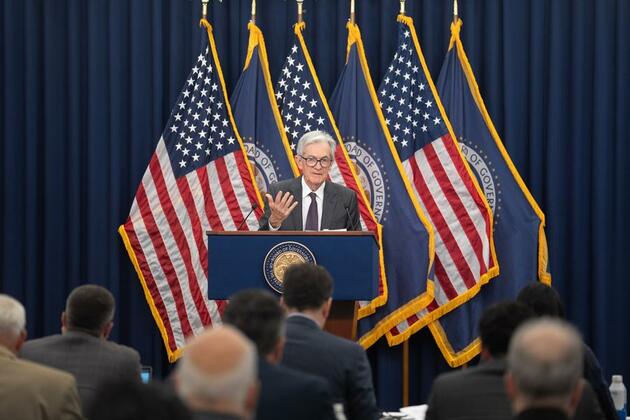
U.S. Fed keeps interest rates unchanged despite pressure from the Trump administration The U.S. Federal Reserve on Wednesday kept...
Higher tariffs have begun to show through more clearly to prices of some goods, but their overall effects on economic activity and...
(Photo credit: Aaron Doster-Imagn Images) Field Level Media's Golf Glance provides weekly news and storylines from each of the major...
WELLINGTON, New Zealand: On July 29, the New Zealand government introduced a controversial bill that would restrict voting access by...
One of Israel's foremost human rights organisations has joined the chorus of similar international groups in designating the Israel's...
WASHINGTON DC: U.S. President Donald Trump has dramatically reduced the timeline he's giving Russian President Vladimir Putin to halt...
GOALPARA, India: In the northeastern Indian state of Assam, near the border with Bangladesh, hundreds of Muslim families now live under...
GAZA – The Palestinian Ministry of Health reported on Tuesday that the death toll in Gaza has surpassed 60,000 since the outbreak of...
MUNICH, Germany: A passenger train derailed in southwestern Germany on July 27, leaving three people dead and more than 40 injured,...